Weather Alert in Utah
Winter Weather Advisory issued February 23 at 10:13PM MST until February 25 at 5:00PM MST by NWS Salt Lake City UT
AREAS AFFECTED: Wasatch Mountains I-80 North; Wasatch Mountains South of I-80; Western Uinta Mountains
DESCRIPTION: * WHAT...Snow expected above 8000 feet. Above 8000 feet, 2 to 8 inches expected. Above 9000 feet, 6 to 16 inches expected. Locally higher amounts to 18 inches possible for the Bear River Range and Upper Cottonwoods. Winds gusting as high as 80 mph across exposed mountain ridgelines. * WHERE...The Wasatch Mountains, and Western Uinta Mountains. * WHEN...From 8 AM Tuesday to 5 PM MST Wednesday. * IMPACTS...Travel could be difficult at times along high elevation routes like Logan Summit, the Upper Cottonwoods, and Wolf Creek Pass. Traction law restrictions may be enacted. Gusty winds could bring down tree branches. * ADDITIONAL DETAILS...Snow levels begin around 6500 feet at the onset of precipitation, but quickly rise to around 8000 feet by Tuesday afternoon. Snow levels may rise as high as 10000 feet overnight under heavy precipitation. Snow character will be heavy and wet given the warm nature of this storm.
INSTRUCTION: Dangerous conditions already exist in the backcountry, per the Utah Avalanche Center. Heavy, wet snow is expected, so backcountry users should exercise extra caution and consult utahavalanchecenter.org for avalanche forecasts. Slow down and use caution while traveling. For winter road conditions from the Utah Department of Transportation, visit http://www.udottraffic.utah.gov. For graphical depictions of the snowfall forecast, including Official NWS Forecast, High End Amount, and Low End Amount, visit weather.gov/slc/winter.
Want more detail? Get the Complete 7 Day and Night Detailed Forecast!
Current U.S. National Radar--Current
The Current National Weather Radar is shown below with a UTC Time (subtract 5 hours from UTC to get Eastern Time).

National Weather Forecast--Current
The Current National Weather Forecast and National Weather Map are shown below.

National Weather Forecast for Tomorrow
Tomorrow National Weather Forecast and Tomorrow National Weather Map are show below.

North America Water Vapor (Moisture)
This map shows recent moisture content over North America. Bright and colored areas show high moisture (ie, clouds); brown indicates very little moisture present; black indicates no moisture.

Weather Topic: What are Stratocumulus Clouds?
Home - Education - Cloud Types - Stratocumulus Clouds
 Next Topic: Stratus Clouds
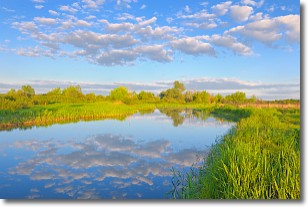
Stratocumulus clouds are similar to altocumulus clouds in their
fluffy appearance, but have a slightly darker shade due to their additional mass.
A good way to distinguish the two cloud types is to hold your hand out and measure
the size of an individual cloud; if it is the size of your thumb it is generally
an altocumulus cloud, if it is the size of your hand it is generally a
stratocumulus cloud.
It is uncommon for stratocumulus clouds to produce precipitation, but if they do
it is usually a light rain or snow.
Next Topic: Stratus Clouds
Weather Topic: What are Wall Clouds?
Home - Education - Cloud Types - Wall Clouds
 Next Topic: Altocumulus Clouds
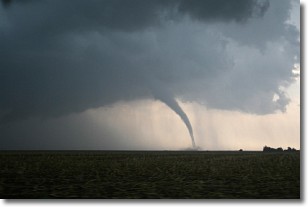
A wall cloud forms underneath the base of a cumulonimbus cloud,
and can be a hotbed for deadly tornadoes.
Wall clouds are formed by air flowing into the cumulonimbus clouds, which can
result in the wall cloud descending from the base of the cumulonimbus cloud, or
rising fractus clouds which join to the base of the storm cloud as the wall cloud
takes shape.
Wall clouds can be very large, and in the Northern Hemisphere they generally
form at the southern edge of cumulonimbus clouds.
Next Topic: Altocumulus Clouds
Current conditions powered by WeatherAPI.com