Weather Alert in New York
Flood Watch issued March 9 at 1:52PM EDT until March 12 at 2:00PM EDT by NWS Burlington VT
AREAS AFFECTED: Northern St. Lawrence; Northern Franklin; Eastern Clinton; Southeastern St. Lawrence; Southern Franklin; Western Clinton; Western Essex; Eastern Essex; Southwestern St. Lawrence; Grand Isle; Western Franklin; Orleans; Essex; Western Chittenden; Lamoille; Caledonia; Washington; Western Addison; Orange; Western Rutland; Eastern Franklin; Eastern Chittenden; Eastern Addison; Eastern Rutland; Western Windsor; Eastern Windsor
DESCRIPTION: Warm temperatures may melt snowpack and increase river flows. * WHAT...Flooding caused by a combination of rain, snowmelt, and ice jams is possible. * WHERE...All of northern New York and northern and central Vermont. * WHEN...Through Thursday afternoon. * IMPACTS...Excessive runoff from snowmelt and rainfall will cause sharp river rises, likely resulting in river ice break up. Ice jams will be possible, along with rapid onset flooding. Flooding of rivers, creeks, streams, and other low-lying and flood-prone locations will be possible and creeks and streams may rise out of their banks. * ADDITIONAL DETAILS... - Mild temperatures will lead to rapid rises on area rivers through early this week. This will be followed by widespread rain Wednesday into Thursday. Rising rivers will cause river ice to break up and flow, potentially resulting in ice jams and associated flooding. As rain moves in Wednesday, the threat will turn more toward open water flooding for those waterways that have lost their ice. Any open water flooding will likely persist through Thursday. - http://www.weather.gov/safety/flood
INSTRUCTION: You should monitor later forecasts and be alert for possible Flood Warnings. Those living in areas prone to flooding should be prepared to take action should flooding develop.
Want more detail? Get the Complete 7 Day and Night Detailed Forecast!
Current U.S. National Radar--Current
The Current National Weather Radar is shown below with a UTC Time (subtract 5 hours from UTC to get Eastern Time).

National Weather Forecast--Current
The Current National Weather Forecast and National Weather Map are shown below.

National Weather Forecast for Tomorrow
Tomorrow National Weather Forecast and Tomorrow National Weather Map are show below.

North America Water Vapor (Moisture)
This map shows recent moisture content over North America. Bright and colored areas show high moisture (ie, clouds); brown indicates very little moisture present; black indicates no moisture.

Weather Topic: What are Stratus Clouds?
Home - Education - Cloud Types - Stratus Clouds
 Next Topic: Wall Clouds
Stratus clouds are similar to altostratus clouds, but form at a
lower altitude and are identified by their fog-like appearance, lacking the
distinguishing features of most clouds.
Stratus clouds are wider than most clouds, and their base has a smooth, uniform
look which is lighter in color than a nimbostratus cloud.
The presence of a stratus cloud indicates the possibility of minor precipitation,
such as drizzle, but heavier precipitation does not typically arrive in the form
of a stratus cloud.
Next Topic: Wall Clouds
Weather Topic: What are Altocumulus Clouds?
Home - Education - Cloud Types - Altocumulus Clouds
 Next Topic: Altostratus Clouds
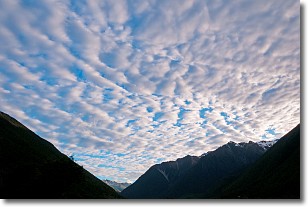
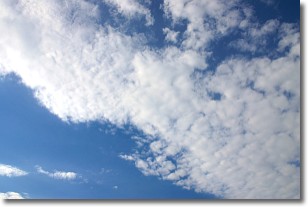
Similar to cirrocumulus clouds, altocumulus clouds are
characterized by cloud patches. They are distinguished by larger cloudlets
than cirrocumulus clouds but are still smaller than stratocumulus clouds.
Altocumulus clouds most commonly form in middle altitudes (between 2 and 5 km)
and may resemble, at times, the shape of a flying saucer.
These uncommon formations, called altocumulus lenticularis, are created by uplift
in the atmosphere and are most often seen in close proximity to mountains.
Next Topic: Altostratus Clouds
Current conditions powered by WeatherAPI.com