Weather Alert in Alaska
Special Weather Statement issued February 8 at 1:57PM AKST by NWS Juneau AK
AREAS AFFECTED: City and Borough of Yakutat; Municipality of Skagway; Haines Borough and Klukwan; Glacier Bay; Eastern Chichagof Island; Cape Fairweather to Lisianski Strait; City and Borough of Sitka; Admiralty Island; City and Borough of Juneau; Petersburg Borough; Western Kupreanof and Kuiu Island; Prince of Wales Island; City and Borough of Wrangell; Ketchikan Gateway Borough; City of Hyder; Annette Island
DESCRIPTION: After a series of shortwaves that brought rain and gusty winds over the past few days, a stronger front will approach southeast Alaska from the west on Tuesday. South to southeast winds will increase through the day Tuesday. Confidence is increasing for windy conditions with strong gusts Tuesday night into Wednesday morning as the front pushes west to east across southeast Alaska. Gales with storm force gusts will be possible ahead and along the frontal passage, especially along north-south oriented channels and along the coastal waters. A period of moderate to heavy rainfall will be possible with the frontal passage, but with the progressive nature of the front, flooding is not expected at this time. Another gale to potentially storm force low will quickly lift northeast into the Gulf and looks to push across southeast Alaska sometime later Wednesday into Thursday, bringing another round of strong gusty winds and moderate to heavy rainfall. Further details on the high wind and flooding potential for this system will be honed in on in the coming days. Looking further ahead, a cooling trend is favored to commence in the wake of these passing systems by late work week into the weekend. Snow levels will begin to lower and a colder outflow wind pattern could set up by late weekend. This could result in a return of snow for some coastal communities, especially across northern southeast Alaska. Further details on the pattern change and snow potential will be honed as the weekend approaches.
INSTRUCTION: N/A
Want more detail? Get the Complete 7 Day and Night Detailed Forecast!
Current U.S. National Radar--Current
The Current National Weather Radar is shown below with a UTC Time (subtract 5 hours from UTC to get Eastern Time).

National Weather Forecast--Current
The Current National Weather Forecast and National Weather Map are shown below.

National Weather Forecast for Tomorrow
Tomorrow National Weather Forecast and Tomorrow National Weather Map are show below.

North America Water Vapor (Moisture)
This map shows recent moisture content over North America. Bright and colored areas show high moisture (ie, clouds); brown indicates very little moisture present; black indicates no moisture.

Weather Topic: What are Stratocumulus Clouds?
Home - Education - Cloud Types - Stratocumulus Clouds
 Next Topic: Stratus Clouds
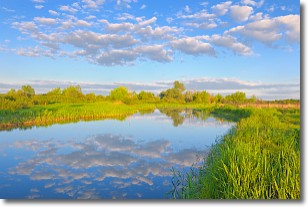
Stratocumulus clouds are similar to altocumulus clouds in their
fluffy appearance, but have a slightly darker shade due to their additional mass.
A good way to distinguish the two cloud types is to hold your hand out and measure
the size of an individual cloud; if it is the size of your thumb it is generally
an altocumulus cloud, if it is the size of your hand it is generally a
stratocumulus cloud.
It is uncommon for stratocumulus clouds to produce precipitation, but if they do
it is usually a light rain or snow.
Next Topic: Stratus Clouds
Weather Topic: What are Wall Clouds?
Home - Education - Cloud Types - Wall Clouds
 Next Topic: Altocumulus Clouds
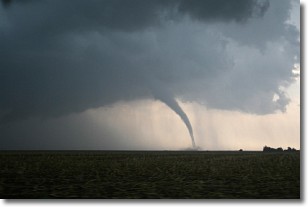
A wall cloud forms underneath the base of a cumulonimbus cloud,
and can be a hotbed for deadly tornadoes.
Wall clouds are formed by air flowing into the cumulonimbus clouds, which can
result in the wall cloud descending from the base of the cumulonimbus cloud, or
rising fractus clouds which join to the base of the storm cloud as the wall cloud
takes shape.
Wall clouds can be very large, and in the Northern Hemisphere they generally
form at the southern edge of cumulonimbus clouds.
Next Topic: Altocumulus Clouds
Current conditions powered by WeatherAPI.com